
Suchi Saria, a John C. Malone Associate Professor of Computer Science at the Johns Hopkins Whiting School of Engineering, has been named among 100 of the world’s most influential people in artificial intelligence in TIME’s TIME100 AI list.
Saria developed an AI-powered platform that serves as an early warning system for sepsis, a life-threatening condition marked by widespread inflammation that can cause rapid organ failure. The condition claims 270,000 lives each year, but Saria’s hospital-based tool has been shown to reduce mortality rates by 18%.
CNN’s Jake Tapper recently aired a story on the lifesaving work, featuring interviews from a hospital where the tool is being used by clinicians to spot sepsis early.
Earlier this year, Saria’s platform, known as the Targeted Real-Time Early Warning System, or TREWS, received clearance from the U.S. Food and Drug Administration. The tool has been commercialized by Saria’s startup, Bayesian Health.
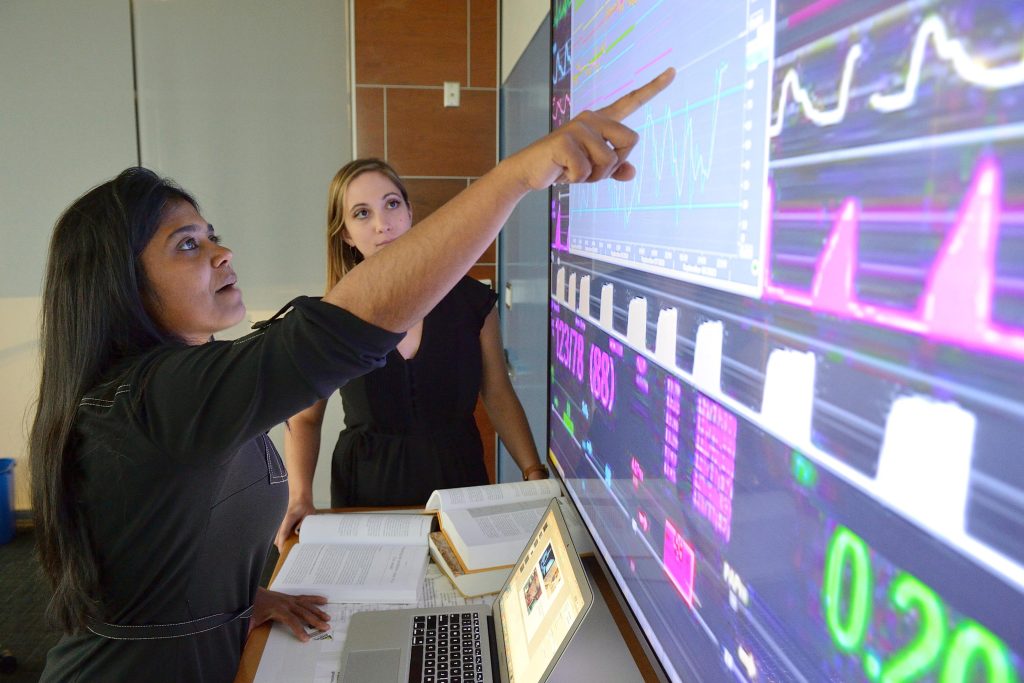
Image Credit: Will Kirk / Johns Hopkins University
Developed by TIME’s editors and reporters, who reviewed AI stories over the past year and sought recommendations from experts and industry leaders, the TIME100 AI list will be featured in the September 7 print issue of the magazine; TIME’s overview of Saria’s contributions to the field is live now.
Follow the milestones and stories featuring Saria’s sepsis detection work throughout the years:
- May 2026 – TREWS receives FDA clearance.
- March 2026 – CNBC names Saria to its Changemakers list.
- Fall 2025 – Saria charts the path to building an AI-powered tool in a Johns Hopkins Magazine Q&A.
- November 2025 – Coverage in the Johns Hopkins University’s Hub, featuring TREWS, notes support from federal research funding.
- October 2024 – Saria’s work is recognized by a WebMD Health Hero Award and her inclusion on Business Insider’s AI Power list.
- March 2024 – Saria is named one of Modern Healthcare’s Top Women Leaders.
- October 2023 – TREWS is named to the TIME Best Inventions of 2023 list.
- July 2022 – Additional data is published by Saria in Nature Medicine.
- August 2015 – A study led by Saria, published in Science Translational Medicine, provides some of the first data on TREWS.