
Zongwei Zhou, an assistant professor of computer science and oncology, is one of nine Johns Hopkins faculty researchers to receive competitive translational funding awards to help promising discoveries move from the laboratory toward real-world applications.
Distributed through Johns Hopkins Technology Ventures (JHTV), the university’s intellectual property administration center, the awards provide critical early-stage support for proof-of-concept studies, technology development, and other work needed to advance promising innovations toward commercialization.
These non-dilutive translational funds are offered twice a year; all proposals are assessed based on innovation, scientific merit, prospective market impact, technical feasibility, and commercialization potential.
Zhou’s project, “AI Infrastructure for Early Cancer Detection,” was one of two proposals to receive an award from the Cohen Translational Engineering Fund. Established through support from Sherry and Neil Cohen, founder and chairman of venture capital firm Emerald Development Manager, the fund provides Whiting School of Engineering faculty with critical early funding to advance discoveries toward commercialization.
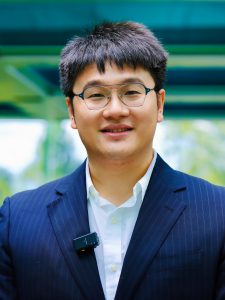
Zongwei Zhou
Zhou’s research focuses on medical computer vision, language, and graphics for early cancer detection and diagnosis. Working with Bloomberg Distinguished Professor of Computational Cognitive Science Alan Yuille, postdoctoral researcher Pedro R.A.S. Bassi, and PhD student Wenxuan Li, he is developing AI infrastructure to support early cancer detection.
To this end, his team has already deployed a platform called BodyMaps, which serves as an open medical library where anyone can explore existing 3D CT scans and upload their own scans to run through the team’s AI models. The platform’s built-in assistant can also answer questions and turn scans into plain-language reports that patients can actually read.
The translational funding afforded by the Cohen award will help advance BodyMaps’ development from a mere research platform into broader, real-world early cancer detection infrastructure.
“Our hope is that BodyMaps becomes for cancer what the JHU COVID-19 dashboard was for the pandemic: an open resource, built at Hopkins, that anyone in the world can use,” Zhou says.
Learn more about the project here: