
As part of the university’s continued investment in data science and AI, the Department of Computer Science is pleased to welcome seven new tenure-track faculty to its ranks this academic year.
Bringing their expertise in embodied and multimodal AI, algorithms and machine learning, and network security and privacy, these faculty members join the nation’s first research university as assistant professors of computer science:
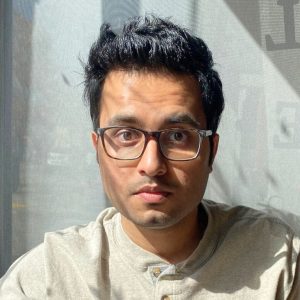 Homanga Bharadhwaj, a member of the Johns Hopkins Data Science and AI Institute (DSAI) and the Laboratory for Computational Sensing and Robotics (LCSR), develops embodied AI systems capable of helping with everyday activities without requiring significant robot-specific data collection or task-specific heuristics. Before joining Johns Hopkins, he served as a research scientist on the Fundamental AI Research team at Meta and earned his PhD from Carnegie Mellon University.
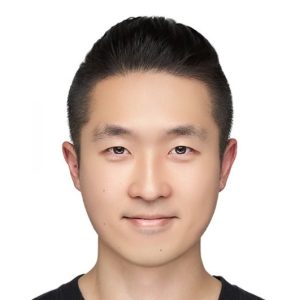 Jaemin Cho, also a member of the DSAI, focuses on multimodal AI, integrating diverse data types to develop models that are interpretable, controllable, and scalable; he is additionally interested in learning action knowledge from unlabeled visual demonstrations and in human-in-the-loop agents that enhance productivity. Prior to joining Hopkins, he spent a year at the Allen Institute for AI. Cho received his PhD in computer science from the University of North Carolina at Chapel Hill.
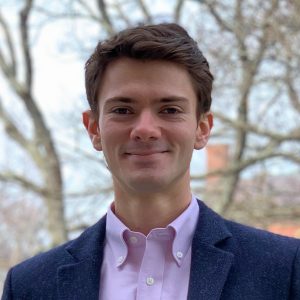 Nicolas Christianson, a member of the DSAI and the Ralph O’Connor Sustainable Energy Institute, conducts research at the intersection of algorithms, machine learning, and optimization, with a focus on developing new, theoretically grounded algorithms and AI/ML frameworks for reliable decision-making under uncertainty. Before joining Johns Hopkins, he was a postdoctoral fellow at Stanford University. He received his PhD in computing and mathematical sciences from the California Institute of Technology.
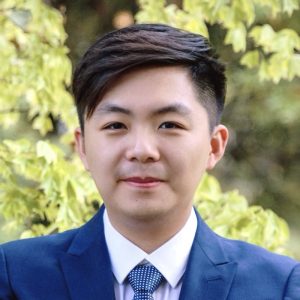
Haimin Hu, a member of the DSAI, the LCSR, and the Institute for Assured Autonomy (IAA), focuses on the algorithmic foundations of human-centered autonomy. Before joining Johns Hopkins, he was a postdoctoral fellow with the Penn Research In Embedded Computing and Integrated Systems Engineering Center and the General Robotics, Automation, Sensing, and Perception Lab at the University of Pennsylvania. Hu received his PhD in electrical and computer engineering from Princeton University.
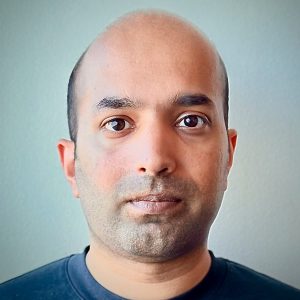 Krishna Murthy Jatavallabhula, a member of the DSAI, focuses on building full-stack robotic systems that can perceive, reason, and act in the real world. Working at the perception-action interface, he tackles both how robots should represent the world around them and how they use it for action. Before joining Hopkins, he spent time as a postdoctoral researcher at the Massachusetts Institute of Technology’s Computer Science and Artificial Intelligence Laboratory and on Meta AI’s robotics research team. He received his PhD from the Université de Montréal.
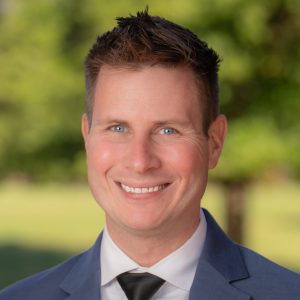 Erik Rye, an affiliate of both the IAA and the Information Security Institute, conducts research on empirical network security and privacy, particularly as motivated by threats that affect actual human beings on the internet. He is especially interested in finding ways that devices and users might be geolocated, fingerprinted, or otherwise tracked over time. Rye holds a PhD in computer science from the University of Maryland.
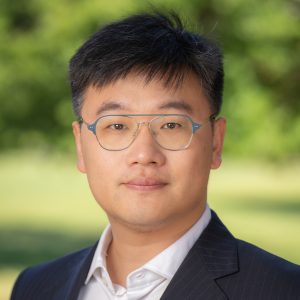 Zongwei Zhou—who holds a joint appointment in Oncology through the School of Medicine’s Sidney Kimmel Comprehensive Cancer Center and is affiliated with the DSAI, the Malone Center for Engineering in Healthcare, and the Center for Imaging Science—focuses on medical computer vision, language, and graphics for early cancer detection and diagnosis. Zhou received his PhD in biomedical informatics from Arizona State University.