Five undergraduate students studying computer science have received Summer Provost’s Undergraduate Research Awards this year.
Provost Joseph Cooper (1991-1995) established the PURA program in 1993 with a generous endowment by the Hodson Trust to support and encourage Hopkins undergraduates to engage in independent research and scholarly and creative projects. The purpose of the summer cycle is to assist and encourage Hopkins undergraduates to continue or begin projects without curricular obligations inhibiting their full-time effort.
This summer’s recipients from CS include:
 Rohan Jay, ’28
Project: Modeling Electric Knifefish Ribbon and Pectoral Fin Control Under Varying Flow and Refuge Conditions
PURA Mentor: Noah Cowan
CS Advisor: Alex Marder
Research Interests: Robot locomotion, bio-inspired robotics
Project Description: Several species of animals have developed behaviors for conserving energy using passive dynamics; for example, in order to stay in the air, some species of gliding birds utilize thermal updrafts, or columns of rising air. By studying these behaviors in animals, we can find ways to improve the energy efficiency of robots and thus their performance. The goal of this project is to model the motions of the ribbon fin and pectoral fins of the electric knifefish as a control system under varying flow velocity and setpoint (goal) position. Previous studies have mostly focused on studying the knifefish with either the flow velocity or setpoint position varying, but not both. The results from this project could be applied to improve underwater vehicles.
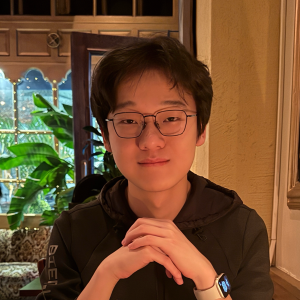 Hua “Harry” Jiang, ’27
Project: Learning Cellular Grammar Across RNA and Chromatin: A Single-Cell Multiomics Foundation Model
PURA Mentor: Hongkai Ji
CS Advisor: Mathias Unberath
Research Interests: Computational biology, single-cell genomics, multiomics data integration, deep learning for biological data analysis
Project Description: This project will develop a prototype single-cell multimodal foundation model to better understand how gene expression and chromatin accessibility together define cell identity and regulation. Using paired scRNA-seq and scATAC-seq data, Jiang will build and evaluate a graph-conditioned deep learning model that learns shared cellular representations, integrates information across modalities, and tests the feasibility of cross-omics prediction. This work aims to provide a reusable framework for future large-scale multiomics analysis and to support more interpretable studies of gene regulatory mechanisms.
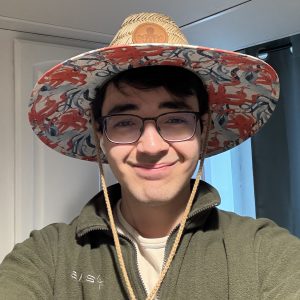 Arda Uzunoğlu, ’27
Project: World Models as Data Engines for Training Efficient and Robust Agents
PURA Mentors: Jieneng Chen, Daniel Khashabi
CS Advisor: David Hovemeyer
Research Interests: Learning dynamics of LLMs, world models
Project Description: This project focuses on repurposing generative world models that understand and simulate real-world environments to create useful training data. This will help build agents that are more robust, adaptable, and dependable when facing unfamiliar or changing situations.
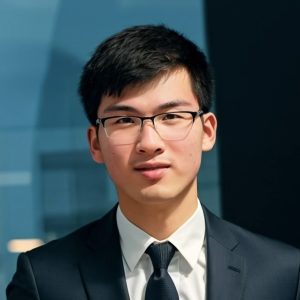 Kelvin Wang, ’27
Project: DizzyDojo: A Gamified Simulation for Improving Resident Interpretation of the HINTS Exam
PURA Mentors: Ali Tehrani
CS Advisor: Ali Madooei
Research Interests: Human-computer interaction, medical education, implementation science
Project Description: Dizziness and vertigo account for millions of Emergency Department visits each year, yet patients with acute vestibular syndrome (AVS) often get misdiagnosed, with clinicians potentially missing strokes. The HINTS (Head Impulse, Nystagmus, Test of Skew) examination is a highly effective bedside neurological tool for identifying stroke in AVS, yet it remains underutilized and poorly taught. This project will develop and evaluate an iPhone-based, gamified simulation that trains physicians to accurately perform and interpret the HINTS exam, targeting the specific skills responsible for missed strokes.
Additionally, Wanzhen Xie, ’28 will be pursuing the project “AI-Based Quantitative 3D Mapping of Inter-Organ Connectivity and Age-Related Changes in the Female Reproductive System” under the guidance of her PURA mentor, Ashley Kieman.