
Faculty and students in the Department of Computer Science are featured in the Spring 2026 issue of Johns Hopkins Engineering Magazine.
Click the links below to read the full stories:
Cover Story: The MVPs of Data Analytics
Students and graduates of the Sports Analytics Research Group employ quantitative analysis to give all types of teams the wisdom and hard numbers they need to perform better.
Featuring: Associate Research Professor Anton Dahbura; Benjamin Buman, Engr ’27; Kiran Shay, Engr ’27; Jake Rasmussen, Engr ’25; Jason Sun, Engr ’26 (MSE); Kevin Wu, Engr ’26 (BS, MSE)
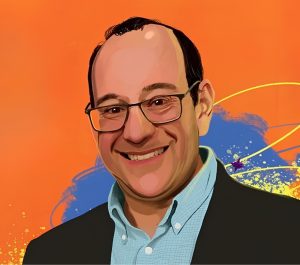
Illustration by Barry Falls
Feature: Signal and Noise
DSAI Director Mark Dredze and team are working to harness AI’s potential while keeping its applications grounded in real-world challenges.
Also featuring: Nanyun “Violet” Peng, Engr ’17 (PhD)
 Impact: Accelerating Pancreatic Cancer Detection
Hopkins researchers have developed a database aimed at leveraging artificial intelligence to spot pancreatic cancer earlier, when it is potentially treatable.
Featuring: Bloomberg Distinguished Professor Alan Yuille; Assistant Research Professor Zongwei Zhou; Wenxuan Li, Engr ’23 (MSE)
Adapted from “Hold on to your PanTS—there’s a new pancreatic cancer detection dataset in town”
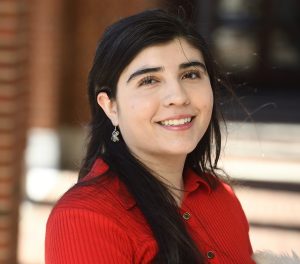
Alessa Carbo
Inquiring Minds: Handshaping Communication
Neural network improves the computational recognition and translation of signed languages.
Featuring: Assistant Professor Eric Nalisnick; Alessa Carbo, Engr ’27
Adapted from “Handshaping communication: Another step towards AI for sign language recognition”
 Can AI Conform to Social Norms?
As artificial intelligence becomes more prevalent in everyday life, Bloomberg Distinguished Professor Gillian Hadfield is helping build the legal and ethical infrastructure needed for an AI-driven future.
Adapted from “New faculty Q&A: Gillian Hadfield“
 Mobilizing to Map the U.S. Soil Microbiome
A team including Hopkins geneticists and students has already discovered more than 1,000 new strains of bacteria and microbes.
Featuring: Bloomberg Distinguished Professor Michael Schatz
Adapted from the Hub
 150 Years of Innovation: Stopping Sepsis
Featuring: John C. Malone Associate Professor Suchi Saria