Research in computer-assisted medicine at the Johns Hopkins University shapes the digital future across all aspects of health care, including prevention, diagnostics, and treatment. This long-term vision is accomplished by pioneering research at the intersection of medicine, nursing, and public health with core engineering disciplines, including data science, artificial intelligence, computer vision, robotics, and human-computer interaction. We seek to address problems holistically, resulting in groundbreaking technologies that enable precise predictive models that anticipate disease progression, patient-specific assessments at various scales, and personalized treatment plans and autonomous robotic execution, ultimately enhancing patient outcomes and optimizing health care resources.
Our faculty lead transformative initiatives across diverse domains, including medical image analysis, wearable sensor technology, telemedicine solutions, medical robotics, human-machine teaming and assurance, explainable artificial intelligence, data science, and causal inference. Leveraging the unique interdisciplinary and collaborative environment that is Johns Hopkins, our researchers merge computer science methods with domain expertise to create innovative tools and platforms. These advancements drive the frontier of precision medicine, shaping the future of health care delivery by harnessing the power of computational tools to augment human expertise and revolutionize patient care.
Research Groups and Labs
Advanced Robotics and Computationally AugmenteD Environments Lab
The ARCADE Lab develops collaborative intelligent systems that support clinical workflows to increase access to—and expand the possibilities of—highest-quality health care. In designing these systems, they pioneer human-centered solutions that are enabled by synergistic advancements across imaging, computer vision, machine learning, and interaction design and that are embodied in emerging technology such as mixed reality and robotics.
Computer Integrated Interventional Systems Laboratory
The CIIS Laboratory exists to develop surgical systems that integrate novel computer and human-machine interface technologies that will revolutionize surgical procedures, extending surgeons' abilities to achieve better outcomes at lower costs.
Data Science and AI Institute
The Johns Hopkins Data Science and AI Institute focuses on research and education in data science, machine learning, and artificial intelligence across diverse fields, including neuroscience, precision medicine, climate resilience, sustainability, public-sector innovation, and social sciences.
Laboratory for Computational Sensing and Robotics
The LCSR’s mission is to create knowledge and foster innovation to further the field of robotics science and engineering. The center’s researchers see robotics as an essential link between computation and action that enhances the health, safety, and efficacy of humanity.
Malone Center for Engineering in Healthcare
The Malone Center for Engineering in Healthcare brings together engineers, clinicians, and care providers who are leveraging data analytics in novel ways, pioneering new technologies, and applying systems engineering principles to speed the deployment of research-based innovations that will enhance the efficiency, effectiveness, and consistency of health care.
Radiology AI Lab
RAIL is an open-structured AI-focused research collaboration that aims to be a Hopkins-wide resource and touchstone for data science collaboration, particularly in image processing and analysis, and an international leader in the research, development, and commercialization of information technology related to AI in imaging informatics.
Sensing, Manipulation, and Real-Time Systems Lab
The SMARTS Lab focuses on components and integrated systems for computer-assisted surgery and robotics in extreme environments, performs research in augmented and mixed reality for human-machine collaboration, and emphasizes system integration activities, including system architectures and component-based software engineering.
People
-
 Email:zchiu@jhu.edu
-
Mark Dredze
Director of the Data Science and AI Institute and John C. Malone Professor Email:mdredze@cs.jhu.edu
-
 Email:craigj@jhu.edu
-
 Email:pkaz@jhu.eduPhone:410-516-5590
-
 Email:moberst@jhu.edu
-
Suchi Saria
John C. Malone Associate Professor Email:ssaria1@jhu.eduPhone:410-516-4126
-
Russell Taylor
John C. Malone Professor Email:rht@jhu.eduPhone:410-516-4639
-
 Email:mathias@jhu.eduPhone:410-516-4253
-
 Email:zzhou82@jh.eduPhone:480-738-2575
Muyinatu “Bisi” Bell

Rama Chellappa


Ralph Etienne-Cummings


Axel Krieger




Jerry Prince


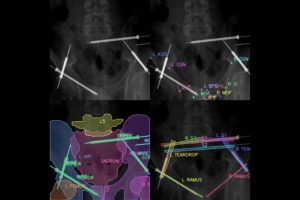
X-ray vision: Tech could improve efficiency of pelvic fracture surgery
Johns Hopkins researchers harness the power of machine learning to develop a first approach to X-ray-guided surgical phase recognition.