
A total of seven undergraduate students studying computer science received a 2025 Provost’s Undergraduate Research Award (PURA) this summer.
Provost Joseph Cooper (1991-1995) established the PURA program in 1993 with a generous endowment by the Hodson Trust to support and encourage Hopkins undergraduates to engage in independent research and scholarly and creative projects.
This year’s recipients from CS include:
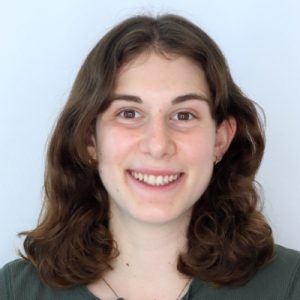 Shira Goldhaber-Gordon, ’27
Project: Can Saliency Models Inspired by Human Vision Improve Image Classifier Efficiency, and What Can This Tell Us About Human Visual Processing
PURA Mentors: Aaron Sampson, Ernst Niebur
CS Advisor: Anqi “Angie” Liu
Research Interests: Computational and mathematical tools to model the human brain and behavior, applying neuroscientific concepts to improve AI tools
Project Description: Over the past few decades, many saliency models have been developed in an attempt to understand how the human brain assigns visual attention to a scene and to predict human eye movements. It is theorized that incorporating saliency into image-processing neural networks, which are also inspired by the human brain, could improve both accuracy and efficiency. This project introduces a method to inform convolutional neural network dropout—a common sparsification tool—using saliency information. The initial results of this exploration indicate that saliency-informed dropout can delay model degeneration and increase accuracy without impacting training time. This methodology may additionally be expanded to different image processing models that may benefit more from saliency information.
 Hua “Harry” Jiang, ’27
Project: CellSymphony: A Comprehensive Sample-Level Single Cell Analysis Tool
PURA Mentor: Hongkai Ji
CS Advisor: Mathias Unberath
Research Interests: Computational biology, single-cell analysis, protein design and engineering
Project Description: CellSymphony is an open-source Python package designed to bridge the gap between cell-level and sample-level analysis in single-cell RNA-seq studies. Unlike conventional tools that emphasize individual cells, CellSymphony focuses on comparing gene expression and cell type proportions across samples. It provides an integrated pipeline—from preprocessing to trajectory and phylogenetic analyses—supported by intuitive visualizations and user-friendly functions, making advanced single-cell analysis more accessible to biologists.
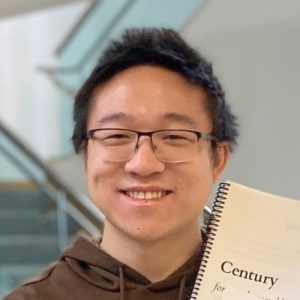 Alex Ma, ’26
Project: Combinatorial Properties of Western Rules-Based Musical Systems
PURA Mentors: Michael Dinitz, Steve Stone
CS Advisor: Patricio Simari
Research Interests: Graph theory, algorithms, discrete mathematics, computational musicology
Project Description: It is widely held among composers that constraints enhance creativity. This project will quantify the extent to which certain music theoretical frameworks constrain choice by modeling melody, harmony, rhythm, and form using strings, formal languages, and combinatorics.
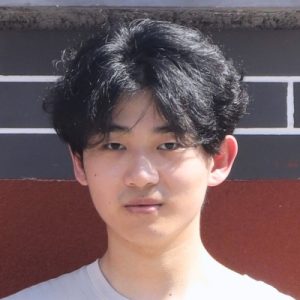 Jiaxuan “Leo” Qi, ’27
Group Project: Streamlining Skin Research: An Efficient and Accurate Tool for Segmenting Epithelial Thickness in OCT Data, ‘The Future Best Friend of Dermatologists’
PURA Mentors: Sam Lee, Luis Garza
CS Advisor: Alex Marder
Research Interests: Computer vision, machine learning applications in health care
Project Description: This project develops a user-friendly software tool that automates epidermal thickness measurement in optical coherence tomography (OCT) skin images using a U-Net-based deep learning model and OpenCV. Replacing manual tracing enables rapid, consistent analysis to support clinical trials on UVB therapy, cell engraftment, and collagen injections.
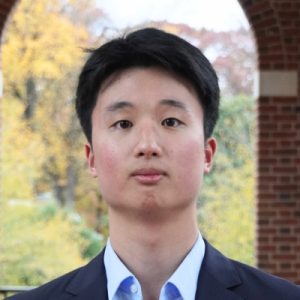 Jooyoung Ryu, ’26
Project: AI-Driven Echocardiographic Labeling for Identification of Stress Cardiomyopathy
PURA Mentors: Robert Stevens, Carl Harris
CS Advisor: Anqi “Angie” Liu
Research Interests: AI- and machine learning-driven precision medicine, developing computational tools to improve patient outcomes
Project Description: This project aims to develop a novel labeling strategy for stress cardiomyopathy (SCM), an underdiagnosed cardiac condition, by leveraging echocardiographic characteristics—an essential component of clinical diagnosis. By replacing traditional International Classification of Diseases (ICD)-based diagnostic codes with echocardiogram-derived labels, the secondary goal is to build machine learning models to identify patients who have SCM and differentiate them from acute myocardial infarction. This echocardiographic labeling approach is hypothesized to improve predictive performance of SCM detection models compared to the traditional ICD-based labeling approach.
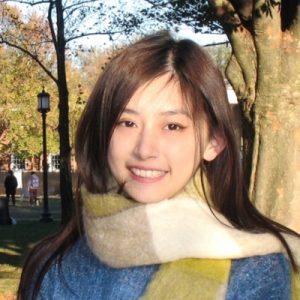 Jiaqi Yu, ’27
Project: A Real-Time Dashboard for Visualization of Neuroimages Live-Streamed from Cloud-Based Miniscopes
PURA Mentors: Arvind Pathak, Janaka Senarathna
CS Advisor: Xin Li
Research Interests: Image analysis, interactive data visualization
Project Description: This project will build a web‑based dashboard that ingests high‑resolution mini-microscope data from freely behaving animals, processes it with image analysis pipelines in real time, and streams interactive maps of cerebral blood flow, neuronal activity, and oxygen saturation to researchers anywhere in the world. The project’s goal is to let scientists spot anomalies immediately, shorten analysis time, and enable global collaboration on long‑term brain‑disease studies.
Additionally, Kevin Lu, ’26 will be pursuing the project “Probing the 12-Lead ECG to Evaluate Medication Use and Compliance: A Deep Learning Approach” under the guidance of his PURA mentor, Robert Stevens.