
As part of the university’s transformational investment in data science and AI, the Department of Computer Science is pleased to welcome nine new tenure-track faculty to its ranks this academic year.
Bringing their expertise in computer security, theory, machine learning, and social computing, these faculty members join the nation’s first research university as assistant professors of computer science and members of the Johns Hopkins Data Science and AI Institute:
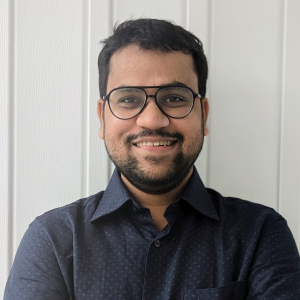 Anand Bhattad, the leader of the university’s Pixels, Perception, and Physics Vision Group, explores computer vision, computer graphics, generative modeling, and physical reasoning. Before joining Johns Hopkins, he was a research assistant professor at the Toyota Technological Institute at Chicago and a visiting scholar at the University of California, Berkeley. He earned his PhD in computer science from the University of Illinois Urbana-Champaign.
 Uthsav Chitra, a member of the Center for Computational Biology, broadly develops machine learning methods for analyzing high-dimensional and multimodal biological data, with a focus on understanding the organization and dynamics of genes, proteins, and cells in healthy and diseased settings. Prior to joining Hopkins, he was a postdoctoral fellow at the Eric and Wendy Schmidt Center at the Broad Institute and a software engineer at Facebook. Chitra received his PhD in computer science from Princeton University.
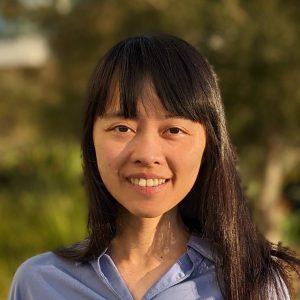 Zih-Yun “Sarah” Chiu’s research goal is to develop the next generation of intelligent robots that can see, plan, move, and learn with the expertise of skilled medical professionals. As such, her work focuses on the mathematical modeling of medical and general knowledge and leveraging these models to empower robots with the ability to operate in complex medical environments precisely, safely, and efficiently. Chiu obtained a PhD in electrical and computer engineering from the University of California, San Diego.
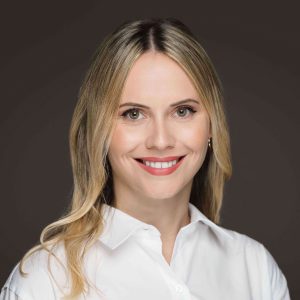 Kristina Gligorić works at the intersection of computational social science and natural language processing. Her current research focuses on developing and applying large language model methods to understand, simulate, and change human behavior, with an emphasis on diet and health. Before joining Johns Hopkins, she was a postdoctoral scholar in the Computer Science Department at Stanford University and received her PhD in computer science from the École Polytechnique Fédérale de Lausanne.
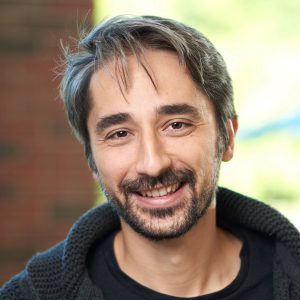 Murat Kocaoglu, leader of the CausalML Lab, is interested in developing new theoretical results that provide insights about fundamental causal discovery and inference problems, as well as developing novel algorithms based on these insights, with applications from computer security and machine learning to generative AI. Prior to joining Hopkins, Kocaoglu was an assistant professor of electrical and computer engineering at Purdue University and a research staff member at the MIT-IBM Watson AI Lab. He received his PhD from the University of Texas at Austin.
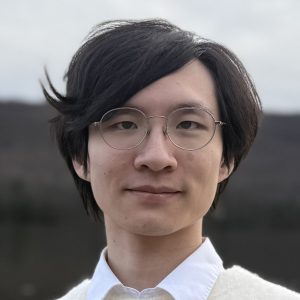 Ziyang Li, a member of the Information Security Institute, focuses on designing and scaling programming abstractions for machine learning applications in domains such as software security, computer vision, natural language processing, planning, and bioinformatics. Working at the intersection of programming languages and ML, he is particularly interested in neurosymbolic methods—approaches that integrate symbolic reasoning with learning-based techniques. Li received his PhD in computer science from the University of Pennsylvania.
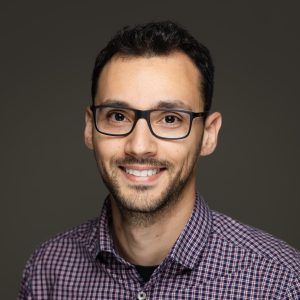 Tiziano Piccardi’s research focuses on social computing, artificial intelligence, human-computer interaction, and web research, with the goal of improving the design of online platforms—including social media, open knowledge platforms like Wikipedia, and user-facing artificial intelligence systems. Before joining Johns Hopkins, he was a postdoctoral scholar in Stanford University’s Human-Computer Interaction Group. He received his PhD in data science from the École Polytechnique Fédérale de Lausanne.
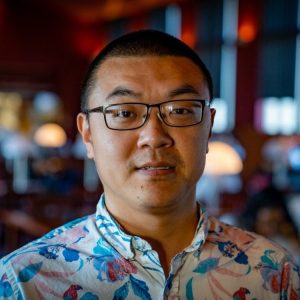 Yaxing Yao is the director of the Hopkins Privacy and Security Lab. His research lies at the intersection of human-computer interaction, privacy and security, and AI, covering various technological contexts and user groups. Prior to joining Johns Hopkins, he was an assistant professor of computer science at Virginia Polytechnic Institute and State University and a postdoctoral researcher in the Institute for Software Research at Carnegie Mellon University. Yao received a PhD in information science from Syracuse University.
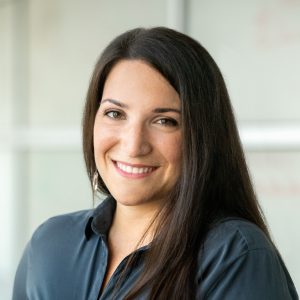 Lydia Zakynthinou works on the theoretical foundations of trustworthy and reliable machine learning and statistics. Her research focuses on developing privacy-preserving methods—particularly those satisfying the formal definition of differential privacy—and understanding their fundamental limitations. Before joining Johns Hopkins, she was a postdoctoral research fellow at the Simons Institute for the Theory of Computing at the University of California, Berkeley, and completed her PhD in computer science at Northeastern University.