
Benefiting society is a prime motivator for many scientists and engineers. A direct way to pursue this aim is via entrepreneurship, where discoveries in the lab can translate to the commercial sector. Yet for many faculty members, finding the time to launch a business, given their myriad other responsibilities, is inherently daunting.
To help navigate the challenges of entrepreneurship at Johns Hopkins, the university established a tech incubator, Johns Hopkins Technology Ventures, over a decade ago. JHTV guides researchers on whichever path makes the most sense for their particular innovation. The paths available include creating a startup company (often the most readily thought of), as well as obtaining a patent or seeking corporate collaboration and licensing opportunities.
“We work with a lot of faculty to get their ideas out of academia and out into the world,” says Elizabeth Burger, the senior director of strategic initiatives at JHTV. “Through one or more of the entrepreneurial pathways, we’re here to support faculty on their journey, especially junior faculty who are new to this kind of enterprise.”
One such junior faculty member walking the entrepreneurial path is Alex Marder, who joined Johns Hopkins a couple of years ago as an assistant professor of computer science. His research centers on enhancing the security of 5G communications networks, initially for use by the Department of Defense.
5G is continuing to roll out worldwide, offering much higher speeds and data capacities than today’s 4G networks. For the federal workforce, though—especially the military—accessing new, public 5G networks can pose significant security concerns because third-party network infrastructure might contain unknown and untrusted hardware. As a result, sensitive communications could be intercepted by adversaries.
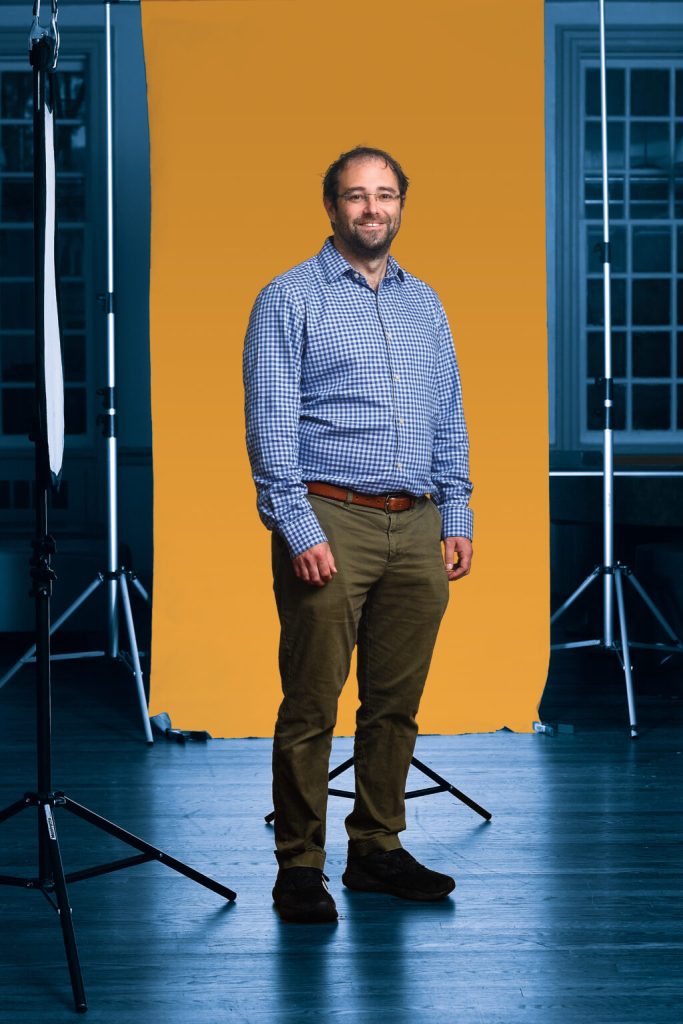
Alex Marder
“The issue is that the DoD needs to be able to use cellphones and other devices, both tactically and not tactically, in military and other settings—and it’s not yet known how to do that securely,” says Marder. “But we’ve come up with a solution.”
He and his colleagues have developed mobile device software that can identify the hardware on cell towers before the device proceeds with data transfer. But rather than trying to fingerprint hardware through physical properties of manufacturing, as prior approaches have explored, Marder’s platform instead observes the behavior of the hardware. That behavior gives telltale signs that reveal the hardware’s maker, helping DoD workers to assess and avoid risks.
“The phone basically looks at the equipment that lives on the cell tower and even beyond, and gauges if this is equipment we want to be connecting to,” says Marder.
To commercialize the technology, Marder and colleagues created a startup last year called Revelare Networks (pronounced “rev-UH-layr,” derived from a Latin word meaning “reveal”). The company, supported by DoD funding, has now grown to seven employees and is further implementing Marder’s network visibility and reliability tools. Field testing has also begun, with the team having recently shipped several phones to U.S. Special Forces in Okinawa to vet cellular networks.
JHTV has advised Marder through the startup process which, he says, is significantly time-consuming, as one might expect. To help shoulder the load, Marder and his colleagues have outsourced some of the chief financial officer-centric tasks to an outside company, and may look to bring in a fractional or full-time CEO down the road.
Marder has also filed two patents for the underlying technology, with one of the patents going through Johns Hopkins and receiving process assistance from JHTV on how to protect as much of the intellectual property as possible.
“JHTV has been an invaluable resource for us,” he says.
Marder’s hope is—as has happened previously with technological innovations like the internet and the GPS—that his team’s 5G-securing technologies are proven effective in the defense sector and will eventually translate to the everyday civilian sector.
“We’re looking forward to seeing Revelare grow and our tools potentially allowing everyone to have a secure 5G experience,” says Marder.
Excerpted from JHU Engineering »